
AURA HAIR JOURNAL
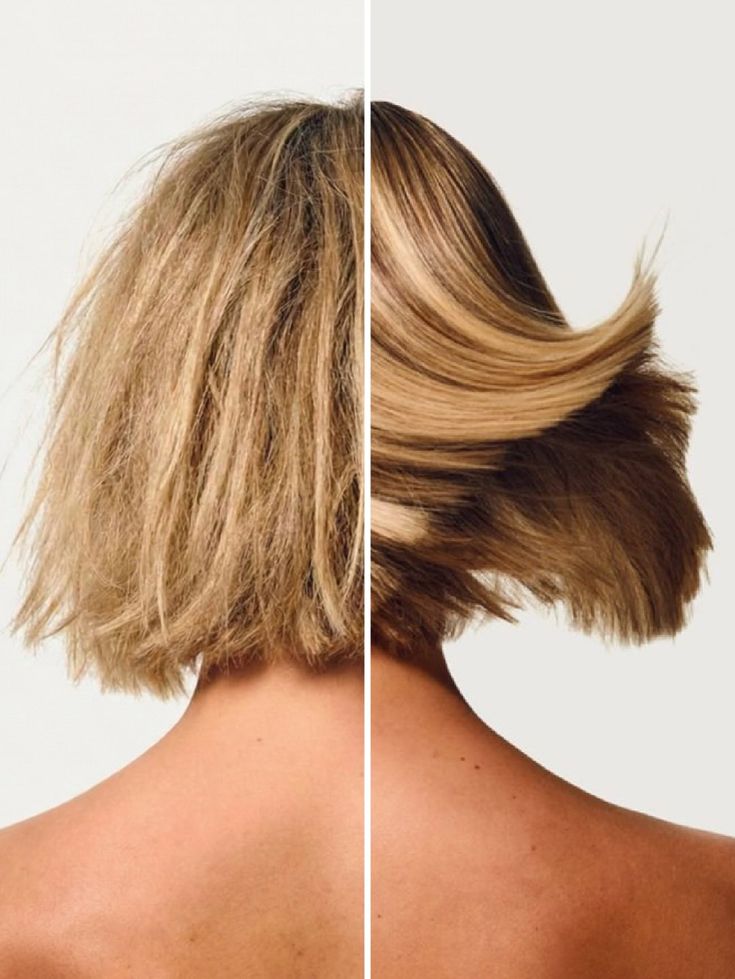
Most heat-protection advice ends with the same line: use heat less. It’s true. It’s also unhelpful if you’ve already learned how you like your hair, and the answer involves a 200°C wand most mornings.
So this guide skips that. We’ll go through what daily styling actually does to your strands, how to protect against most of it, and what to do when your hair is already showing signs of heat damaged hair. The goal isn’t to give up your routine. It’s to make the routine cost you less.
What heat damaged hair actually looks like
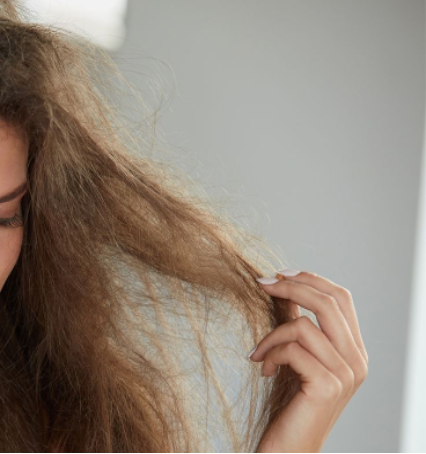
Healthy hair is held together by chemical bonds inside each strand, and a layer of flat, overlapping cells on the outside called the cuticle. The cuticle is what catches the light when your hair shines. Heat damaged hair shows up first in the ends: rougher to the touch, less reflective in photographs, splitting more often than it should. It builds up over months.
Above 150°C the cuticle starts to lift. Above 220°C, water trapped inside the strand can vaporise and produce small internal fractures — bubble hair. Once it shows up it doesn’t reverse. The fix isn’t one product. It’s sequence and temperature.
The daily routine that prevents heat damage
Three steps, used together, do most of the protection work.
1. Stop drying with full heat
When hair is soaked, the cuticle is already lifted. Towel-dry gently — an old t-shirt is better than terry cloth — until your hair is damp, not dripping. Then air-dry for ten minutes if you can, or rough-dry on low.
2. Add a leave-in conditioner
If you style most mornings, your hair is losing moisture faster than it can recover. A leave-in with humectants like panthenol or hydrolysed silk gives the cuticle something to hold onto before you reach for a tool.
3. Use heat protectant — properly
The right amount looks like an even mist on damp hair, applied four to six inches away, brushed through. The product needs to coat the strand, not sit on top of it. If your hair feels wet, that’s too much. If it dries with no glossy finish at all, it was probably too little.
Temperature settings that matter more than the product
Most tools default to a single setting near 230°C. That’s higher than fine or medium hair ever needs. A working guide:
- Fine, color-treated, or fragile hair: 130 – 150°C
- Medium hair: 165 – 180°C
- Coarse or thick hair: 185 – 200°C
- Above 200°C: only for stubborn texture, and not every day
Two passes at 180°C will damage your hair less than one slow pass at 220°C.What helps when your hair is already heat damaged
You can’t reverse breakage. You can smooth its appearance with finishing products, and you can stop it spreading by protecting new growth. Bond-building treatments help repair some of the broken disulfide bonds inside the strand. They don’t replace lost protein, and they don’t reseal a damaged cuticle. The realistic plan: protect from now on, treat once a week if you’ve been styling a lot, and let the damaged length grow out.
FAQ
How often should I use heat protectant?
Every time you use heat above 130°C. That includes blow-drying.
Can I apply heat protectant to dry hair?
Most are designed for damp hair, where the cuticle is still slightly open. Sprays for dry hair will say so on the label.
How long until my hair recovers from heat damage?
Damaged length doesn’t recover — it grows out. Expect to see new, healthier hair coming in at the roots within three months of starting a protective routine.
Hair changes slowly, in either direction. If you start the routine above today, you’ll see the difference by month three.